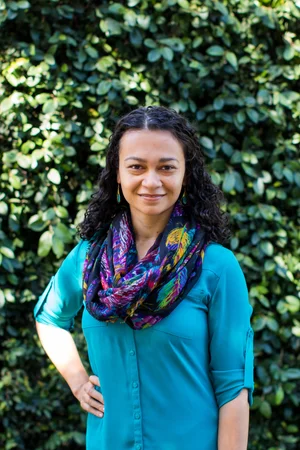
I’m a trauma therapist in Sacramento and helping folks heal from childhood trauma is my greatest passion.
In my last blog post, I shared an insight that’s come to me over the many years of doing this work: “The behaviors that kept you safe earlier in your life are now holding you back."
That inspired me to reflect on more truths about trauma—things I’ve learned that make intuitive sense to me, but that the average person might not know.
Without further ado, let’s talk trauma!
1. The body keeps the score.
The Body Keeps the Score by psychiatrist and neuroscientist Bessel van der Kolk is probably the most famous book about trauma. (Also available at Sacramento Public Library)
The Body Keeps the Score was published in 2014 and since then has spent over 370 weeks on the New York Times bestseller list. The basic premise of the book is that trauma is stored in the body and that healing requires body-based approaches.
I’m a somatic therapist and I don’t believe that talk therapy alone is sufficient for healing trauma.
I have worked with so many intelligent, insightful people who had a logical understanding of their trauma—what happened and how it affected them. And yet they didn’t feel different. They continued to suffer from depression, or anxiety, or low self-esteem, or relationship struggles.
Unfortunately, understanding is not enough.
Certain types of trauma especially, like developmental trauma or preverbal trauma, are not going to be able to heal through talk therapy, since the trauma occurred and was stored in your brain and body before you had access to spoken language.
If you have a history of trauma, I highly recommend working with a somatic therapist, but you can also begin a body-based self-healing journey through yoga or other movement practices, theater, or somatic practices.
Check out this video where van der Kolk shares 6 ways to heal trauma without medication:
2. We have all experienced trauma.
I have a question in my intake paperwork for new therapy clients that asks whether you have a history of trauma. I’d estimate that 90% of my new clients answer “No.” And then I meet with these folks for the first time and listen to them talk about their life experiences, and my assessment is that probably about 90% of them do have a history of trauma.
Why are so many people unaware of their trauma?
My theory is that most of us think of “trauma” as something very overt, something really big and bad and uncommon—like being in a war, or the most extreme forms of abuse or neglect. So we say, “Nope, that’s not me,” and dismiss the idea of trauma. We might think that because other people had it worse, that means our childhood wasn’t traumatic.
A lot of the clients I meet with come to therapy because their lives look good on paper, but they still don’t feel happy or fulfilled. They’re successful by societal standards, but they still feel a sense of emptiness.
As I get to know them and their histories, I often learn that their physical needs were generally taken care of by their caregivers when they were growing up, but their emotional needs were not. Childhood emotional neglect is extremely common, but sadly under-recognized.
Patrick Teahan speaks to this phenomenon in the video below. Patrick is a therapist who specializes in childhood trauma and he has one of my favorite YouTube channels. In this video, he talks about what he calls “tricky families,” and how growing up in a tricky family can yield the same symptoms and problems as growing up in a family with more blatant abuse.
Whether you grew up in a “tricky” family or not, just about everyone has had an overwhelming life experience at some time or another that had a lasting negative impact on them.
3. “Trauma” is just an overwhelming life experience.
So I’ve established that many of us associate the word “trauma” with something extreme.
Well, if it helps, we can change the language. In simpler terms, we can think of trauma as an overwhelming life experience. Or more commonly, as with CPTSD, a series of overwhelming life experiences.
I don’t know who to credit (if you know who said this originally, please let me know in the comments!) but in the trauma therapy world there’s a common saying that trauma can be defined as any experience that’s “too much, too soon, too fast.”
It can also be too much for too long. Or not enough for too long (as in cases of neglect).
Trauma isn’t the event, it’s the way the event affects us (which is why two people can experience the same event and one can incur trauma while the other does not).
The trauma is the overwhelm. It’s when the stressors outweigh our resources to cope with them. It’s when it’s too much for our nervous system, and we don’t have enough support.
4. Trauma blocks love. Love heals trauma.
“Trauma blocks love. Love heals trauma.” is a quote from psychiatrist and trauma therapist Dr. Frank Anderson. Dr. Frank is an expert trauma therapist and one of my favorite people to train with as I continue to develop my skills as a clinician.
I love this quote because it’s so simple and so true. I love the way it takes away all the clinical jargon and puts it in terms we can all understand.
Trauma blocks love. It makes it very difficult to receive the love and care that’s available to us.
As a result of trauma, we may have negative core beliefs that tell us we’re unlovable, or that we’ll be abandoned, or that people can’t be trusted.
We may have protector Parts that keep us on the defense because being seen and known—being loved—feels vulnerable, and vulnerability doesn’t feel safe.
Trauma is born through a lack of connection. We’ve established that “trauma” is just an overwhelming life experience. Well, more often than not, the overwhelm comes from having to hold that experience all on our own.
In the following video, which is an excerpt from The Mel Robbins Podcast, physician, author, and trauma and addiction specialist Gabor Maté explains how being alone with what happened is at the root of trauma:
(Content Warning: Mentions of sexual abuse)
“Trauma is not what happens to us, but what we hold inside in the absence of an empathetic witness.”
Love heals trauma. Trauma is healed in connection, when we gain that empathetic witness.
This is what I provide for my trauma therapy clients—a safe holding environment, unconditional positive regard, and warm acceptance. I love the modalities I use, but it’s the care that’s truly the foundation of the healing.
5. Trauma fragments the self. Healing comes from reconnection with self.
I just shared how important our connections to others are in healing from trauma (or preventing trauma in the first place). And developing a healthy, loving relationship with yourself is equally important for trauma healing.
The idea of a fragmented self is central to Internal Family Systems (IFS) and other Parts work modalities, which is the primary model I use for treating trauma, in addition to somatics. At its core, Parts work is about inner relationship repair.
In extreme cases, trauma can result in dissociative identity disorder (DID), formerly known as multiple personality disorder. But all of us have Parts.
Wounded Parts hold emotions associated with the trauma that felt intolerable, such as terror, rage, shame, or despair. Until we heal, these wounds generally stay outside of our conscious awareness, but they still negatively impact us in ways we often don’t realize.
These wounded Parts stay locked in the basement of our psyches, so to speak, so that we can function and go about our daily lives.
When we can befriend and reclaim these disowned Parts and help them release their burdens, we gain a sense of wholeness, replacing the emptiness that so many of us trauma survivors feel. And then we can function even better, moving from merely surviving to thriving.
So how can we begin to reconnect with ourselves?
When we experience trauma, we disconnect from ourselves to get away from the overwhelming experience. Many of us dissociate and feel disconnected from our bodies.
We need to develop a practice of inner connection, to build the capacity to be with overwhelming emotions and physical sensations.
A daily practice I do, which I also recommend to my therapy clients, is to sit with my eyes closed and simply observe my emotions and physical sensations for 5 minutes. This is also a time I use to connect to my inner child and see if she has anything she’d like to communicate with me.
If you’ve been disconnected from yourself, this may feel uncomfortable or overwhelming. You can start with one minute and gradually build your capacity over time.
This practice is a way to improve our interoception, which is the ability to sense the internal state of our body, which can include everything from hunger and fullness signals, to feeling our heartbeat, to noticing that we’re short of breath. Interoception helps us regulate our emotions.
If you would like a guided practice, I recommend the Wheel of Awareness practice from Dr. Dan Siegel.
Learn your own truths about trauma with the help of a trauma therapist in Sacramento.
You might have already been aware of your history of childhood trauma and the ways it negatively impacts you. Or this post may have helped you recognize your own “tricky family” or other overwhelming life experience.
The traumas I’ve spoken about in this post are primarily relational traumas—the wounds inflicted from what our loved ones did or didn’t do, or from a lack of support—having no one to turn to—when something really big and impactful happened to us.
Relational trauma is best healed in relationship and support from a therapist can help.
I would love to be your empathetic witness.
If you’re in the Sacramento area and would like to explore healing trauma through therapy, contact me today and let’s see if it’s a fit. I tailor trauma therapy to each individual’s unique experience and I always incorporate body-based approaches into the work.
Let’s get you to a place where you don’t just have an intellectual understanding of your trauma, but you actually feel different, in your body, your emotions, and your daily experiences. You deserve to live a full life, without trauma holding you back. I’d love to help you reconnect to yourself.